A roof in Miami does not get an easy assignment. It has to handle punishing sun, wind-driven rain, salt air, heavy humidity, and hurricane season – often all in the same year. That is why choosing the best roofing materials for Miami homes is not just about appearance. It is about how well the roof will protect the structure, meet code, hold up over time, and make sense for your budget.
There is no single material that is right for every home. The smart choice depends on the building style, roof slope, neighborhood requirements, exposure to the coast, and how long you plan to stay in the property. A material that works well on one house in Coral Gables may not be the best fit for a low-slope home closer to the water or a property owner trying to control upfront cost.
What Miami homes need from a roof
Miami roofs face a combination of stress that rules out a lot of average solutions. Heat matters, but wind resistance is just as important. So is moisture control. A roof that looks good on day one but struggles with uplift, underlayment failure, or water intrusion can become an expensive problem fast.
For most property owners, the decision comes down to five practical factors: storm performance, lifespan, maintenance, energy efficiency, and total cost over time. Upfront price matters, of course, but a cheaper roof that requires early replacement or frequent repairs is not always the better value.
Local code compliance also matters more than many homeowners expect. Roofing systems in Miami-Dade County are held to strict standards for a reason. Product approvals, installation methods, fastening patterns, and permit requirements all play a real role in how a roof performs when weather turns rough.
Best roofing materials for Miami homes by performance
Tile roofing
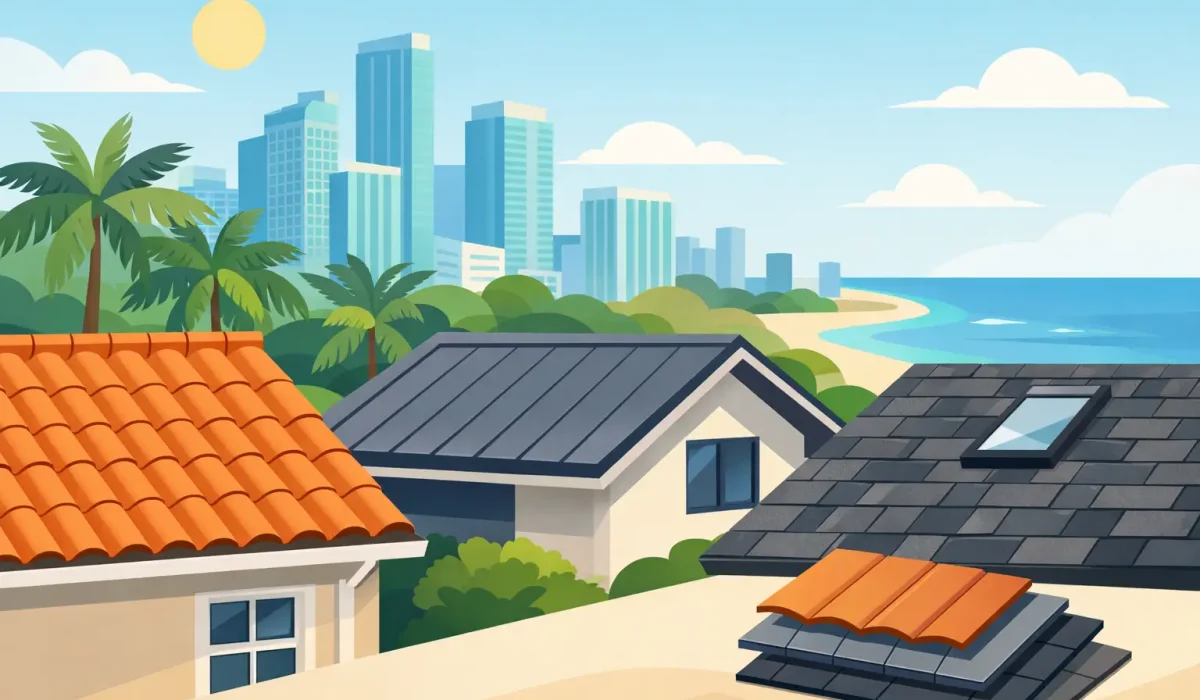
Tile remains one of the strongest options for South Florida homes, especially for owners who want long service life and a classic look. Concrete and clay tile both perform well in hot weather and can hold up against the climate when properly installed.
One reason tile stays popular is durability. It handles UV exposure well, and it does not deteriorate the same way some lighter materials can under years of direct sun. Tile also offers strong curb appeal, which matters in neighborhoods where architectural style and resale value are part of the equation.
The trade-off is weight and cost. Tile roofing is heavier than many other systems, so the structure needs to be able to support it. Repairs can also be more specialized. Individual tiles can crack from impact or foot traffic, and matching older profiles is not always simple. Still, for many Miami homeowners, tile is one of the best long-term investments available.
Metal roofing
Metal roofing has become a leading choice for owners who want strength, longevity, and a clean modern appearance. In Miami, metal performs especially well because it sheds water efficiently, resists rot and insect damage, and reflects heat better than many traditional materials.
A properly engineered metal roof can offer excellent wind performance, which is a major advantage in hurricane-prone areas. It is also lighter than tile, which can make it a practical option for homes where structural load is a concern.
That said, not every metal roof is the same. The panel type, thickness, coating, and installation quality make a big difference. In coastal environments, corrosion resistance is a serious consideration. A lower-grade metal system may not age well near salt air. For homeowners who want a roof that can last for decades with the right specifications and maintenance, metal is often near the top of the list.
Asphalt shingles
Asphalt shingles are usually the most budget-friendly option upfront, and they still make sense for some Miami homes. They are widely available, familiar to many homeowners, and easier to replace than heavier premium systems.
The biggest question with shingles in South Florida is not whether they can work. It is whether they are the best value for your particular property. Compared with tile or metal, shingles generally have a shorter service life in this climate. Constant UV exposure, high temperatures, wind, and moisture can wear them down faster than in milder regions.
That does not mean shingles should be dismissed. On the right home, and with the right product rating and installation method, they can be a practical solution. For owners managing a tighter budget or planning a shorter ownership timeline, architectural shingles may be a reasonable choice. The key is going in with realistic expectations about lifespan and storm exposure.
Flat and low-slope roofing systems
Many Miami homes, multifamily buildings, and modern designs have flat or low-slope roof sections. These areas need a different approach than steep-slope systems. Modified bitumen, single-ply membranes, and other flat-roof materials are designed to manage drainage, ponding risk, and sun exposure in ways that tile or shingles cannot.
For low-slope areas, workmanship is critical. Water moves differently on these roofs, and small installation mistakes can turn into leaks. Material selection also depends on foot traffic, rooftop equipment, and how exposed the building is to standing water and heat.
Flat roofing systems can perform very well in Miami when the design is right and maintenance is consistent. They are not a shortcut system. They need proper detailing around penetrations, drains, flashing, and transitions.
How to choose the best roofing materials for Miami homes
The best choice starts with the house itself. Roof pitch is one of the first filters. Tile and shingles are typically used on steeper slopes, while flat systems belong on low-slope sections. Metal can work across a range of designs, but the exact system still needs to match the structure.
Then there is location. A home near Biscayne Bay or in Key Biscayne may face stronger salt exposure than a more inland property, which can influence the best metal finish or fastening system. Large trees, nearby structures, and the home’s orientation to sun and wind also affect wear patterns over time.
Budget should be viewed in two parts: installation cost and life-cycle cost. A lower upfront number may feel safer, but if the system needs replacement much sooner, the long-term math changes. This is especially true for owners who plan to stay in the home for many years.
Insurance and resale can also influence the decision. Buyers and carriers both pay attention to roof age, code compliance, and storm resistance. A roof is not just a covering. It is part of the property’s overall risk profile.
Why installation matters as much as material
A premium roofing product cannot make up for poor workmanship. In Miami, that matters more than ever because roofing systems are expected to meet demanding code requirements and perform in severe weather.
Fasteners, underlayment, flashing, ventilation, edge details, and permit compliance all affect how a roof holds up. Two homes can have the same material on paper and get very different results based on how the roof was installed. That is one reason experienced local contractors matter. They understand not just the product, but how it needs to be built for this climate.
Bob Hilson & Company has worked on roofing systems across Miami and South Florida long enough to see what lasts, what fails early, and what makes the most sense for different property types. That kind of practical experience helps homeowners avoid choices that look good in a brochure but do not hold up in the field.
When repair makes sense and when replacement is smarter
Sometimes the question is not which material is best overall, but whether the existing roof still has enough life left to justify repairs. If the roof is relatively new and the issue is isolated, a targeted repair may be the smart move. If the system is aging, leaking in multiple areas, or showing broader deterioration, replacement often becomes the better financial decision.
This is where material choice becomes tied to timing. If you are already facing a major roofing project, it may be worth upgrading into a longer-lasting system rather than repeating the same short-term cycle.
The right roof is the one that fits your home and your risk
For many Miami homes, tile and metal rise to the top because of their durability and long-term value. Shingles still have a place when budget is the driving concern, and flat roofing systems are essential where the structure calls for them. The best answer depends on how your home is built, how exposed it is, and what kind of performance you expect over the years ahead.
A good roofing decision should leave you with fewer worries, not more. If you are weighing options, focus on proven materials, proper installation, and a contractor who understands South Florida conditions firsthand. The roof over your home has one job – protect everything under it when the weather does its worst.