
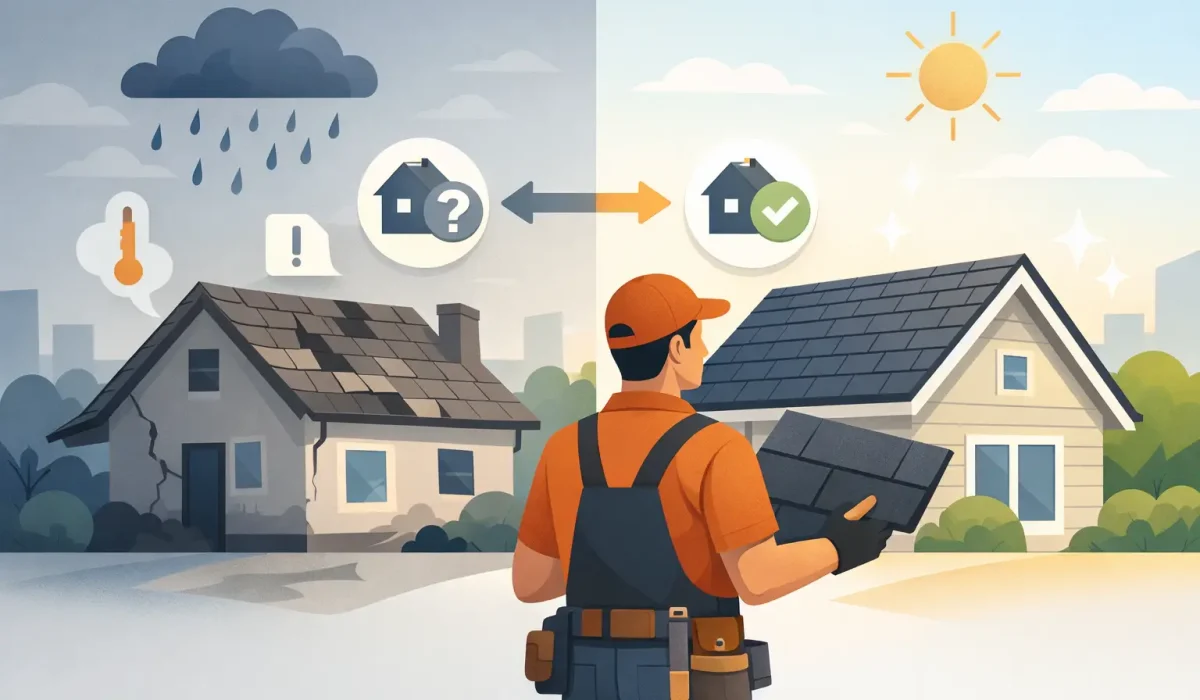
A roof rarely fails all at once. More often, it gives you a long series of warnings – stains on the ceiling, cracked tiles, loose shingles, ponding water, recurring leaks after heavy rain. By the time those problems start repeating, roof replacement may be the smarter investment than continuing to patch an aging system.
For property owners in South Florida, that decision carries real weight. Heat, wind, salt air, UV exposure, and storm season put roofing materials under constant stress. A roof that might last longer in another region can wear out faster here, especially if it was installed poorly, repaired inconsistently, or pushed beyond its service life.
How to Tell if Roof Replacement Makes Sense
The first question is not whether your roof has damage. Most older roofs do. The real question is whether the damage is isolated or part of a larger pattern.
If leaks keep returning in different areas, the problem is usually bigger than one flashing detail or one damaged section. When underlayment has deteriorated, fasteners have backed out, decking has taken on moisture, or large areas of the roof have become brittle, repair work starts to act like a temporary hold rather than a lasting fix.
Age matters too, but not by itself. A well-built roof with good maintenance can sometimes justify targeted repairs longer than expected. On the other hand, a roof that is younger on paper may still need full replacement if it has storm damage, installation defects, or years of deferred maintenance behind it. That is why a proper inspection matters more than guesswork.
For commercial properties, the signs can look different. You may see membrane separation, soft spots, chronic ponding, failed penetrations around rooftop equipment, or interior leaks that affect tenants and operations. In those cases, the cost of waiting can spread well beyond the roof itself.
The Cost Trade-Offs Behind Roof Replacement
Many owners delay roof replacement because they want to avoid a major upfront expense. That is understandable. But there is a point where repeated repair bills, interior damage, and insurance complications cost more than replacing the roof on a planned schedule.
A small repair on a relatively healthy roof is money well spent. A fifth repair on a roof near the end of its life is different. You are not only paying for labor and materials each time. You are also absorbing the risk of hidden damage, business interruption, drywall repairs, flooring damage, mold concerns, and the stress of the next storm.
There is also the issue of timing. Planned replacement gives you more control over material selection, scheduling, budgeting, and permitting. Emergency replacement usually comes with more pressure and fewer options. If the roof fails during the rainy season or after a major weather event, delays and additional damage become more likely.
That is one reason experienced contractors often recommend acting before a roof reaches complete failure. It is not about overselling work. It is about protecting the structure underneath and avoiding a more expensive problem later.
What a Good Replacement Project Should Include
A quality roof replacement is more than removing old materials and putting on new ones. The system only performs as well as the details beneath the surface.
That includes inspection of the roof deck, replacement of damaged substrate where needed, proper underlayment, correct flashing installation, secure fastening, ventilation where applicable, and careful attention to drainage. For flat and low-slope roofs, transitions, penetrations, and edge conditions matter just as much as the field membrane. For tile, shingle, and metal systems, layout, attachment methods, and manufacturer requirements are all part of getting a durable result.
In coastal markets like Miami and the Florida Keys, code compliance is not a side issue. It is central to the project. Wind uplift requirements, attachment schedules, and permit documentation all need to be handled correctly. A roof may look fine from the street and still fall short where it counts if shortcuts were taken during installation.
This is where contractor experience makes a difference. A licensed and insured roofing company with permit knowledge and trained crews can spot issues early, document the scope clearly, and install the system to current standards instead of relying on yesterday’s methods.
Choosing the Right Roofing System
Not every roof should be replaced with the same material it had before. Sometimes the original system still makes sense. Sometimes it does not.
Shingle roofing can be a practical option for many residential properties, particularly when budget matters and the roof design supports it. Tile remains a popular choice in South Florida because of its appearance and durability, though it carries more structural and installation considerations. Metal roofing appeals to owners who want long-term performance and a system that handles harsh weather well. Flat roofing systems for commercial buildings require a different conversation altogether, with attention to drainage, traffic, penetrations, and maintenance demands.
There is no single best roof for every property. The right choice depends on the building type, slope, exposure, neighborhood requirements, maintenance expectations, and budget. What matters is selecting a system that fits the structure and is installed by crews who know that system well.
What Property Owners Often Overlook
One of the most common mistakes is focusing only on the roof covering. The visible material matters, but so do the parts that make the whole assembly work.
Flashing failures around chimneys, walls, skylights, drains, and equipment can lead to leaks even when the field of the roof still appears intact. Poor drainage can shorten the life of an otherwise decent system. Hidden deck damage can turn a straightforward project into a more involved one once tear-off begins. That does not mean every replacement runs into major surprises, but it does mean honest planning should leave room for the conditions that only become visible during the work.
Another overlooked issue is documentation. On both residential and commercial projects, owners benefit from having a clear scope of work, permit handling, material specifications, and warranty information explained upfront. If a proposal is vague, the job can become vague too.
Roof Replacement and Long-Term Property Value
A new roof does more than stop leaks. It helps preserve the value of the entire property.
For homeowners, that can mean stronger curb appeal, fewer maintenance headaches, and better marketability when it is time to sell. For commercial owners and managers, it can mean fewer disruptions, better protection for tenants or inventory, and a more defensible maintenance strategy for the asset.
There is also peace of mind that comes with knowing the roof was installed to current standards. In a region where storms are a fact of life, confidence in the roof system matters. You do not want to enter hurricane season hoping a patch job holds.
Companies with long local experience understand that reality. Bob Hilson & Company, Inc. has been serving this market for decades, and that kind of history matters when you need a contractor who understands local code, local weather, and the difference between a quick fix and a professional installation built to last.
When to Act on a Roof Replacement
If you are seeing active leaks, visible deterioration, storm damage, or a steady increase in repair needs, it is time to have the roof evaluated. Waiting for obvious failure usually leads to higher costs and more disruption.
The best time to replace a roof is when you still have room to make a careful decision. That means getting a professional inspection, reviewing your options, and weighing the cost of continued repairs against the value of a new system. In many cases, the smartest move is not the cheapest short-term option. It is the one that protects the property for years to come.
A dependable roof is not a cosmetic upgrade. It is one of the systems your building relies on every day, whether anyone notices it or not. If yours is showing its age, this is the time to deal with it directly and get ahead of the next problem instead of reacting to it.