A small leak after a hard rain can feel manageable. Then the ceiling stain grows, the drywall softens, and suddenly the question is not whether the roof needs attention, but whether roof repair versus replacement makes more sense for your property.
In South Florida, that decision carries more weight than it does in milder climates. Constant sun, wind-driven rain, humidity, salt air, and storm exposure can wear down roofing systems faster and in different ways. A quick fix is sometimes the right move. Other times, patching a failing roof only delays a larger and more expensive problem.
How to think about roof repair versus replacement
The right answer usually comes down to five factors: the roof’s age, the extent of the damage, the type of roofing system, the repair history, and whether the roof is still performing as a complete system.
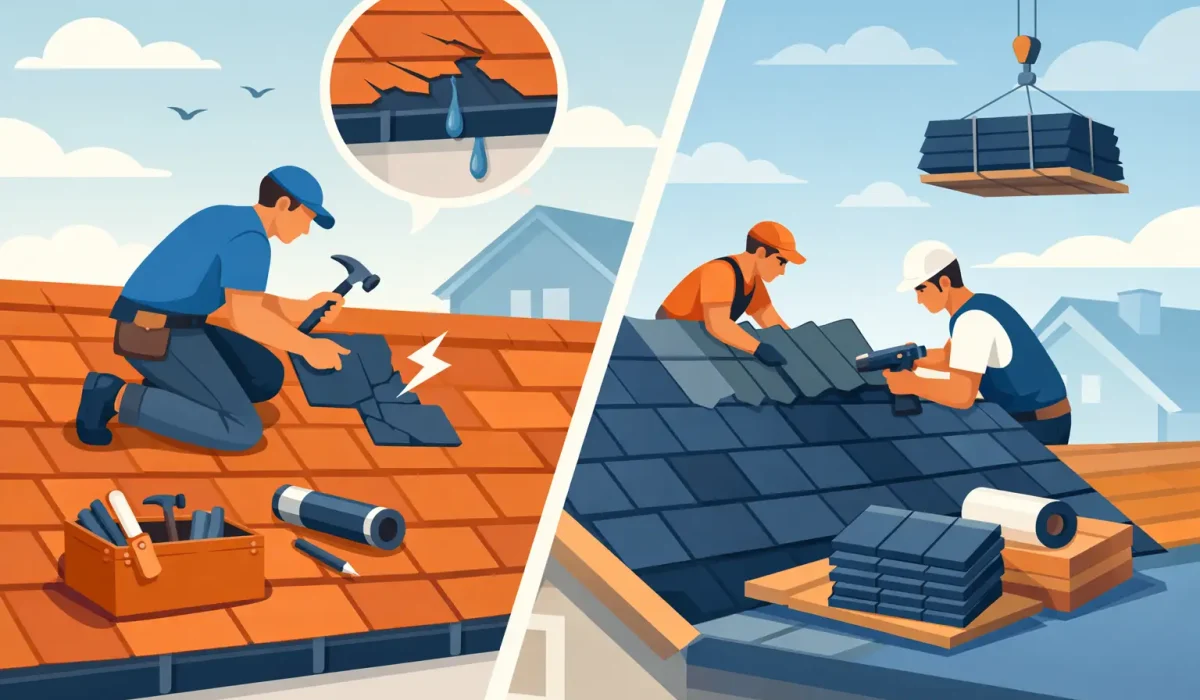
If the problem is isolated, such as a small section of lifted flashing, a few missing shingles, or a limited leak around a penetration, repair may be the smart and cost-effective option. If the roof is nearing the end of its service life, has widespread deterioration, or has been patched repeatedly, replacement often provides better value and more reliable protection.
This is where many property owners get stuck. They want to avoid replacing a roof too soon, but they also do not want to spend good money on repairs that will not hold. That is a reasonable concern. Roofing decisions should be based on condition and performance, not guesswork.
When a roof repair is the right call
Roof repair makes sense when the damage is limited and the surrounding roof area is still in solid condition. A newer roof with one problem area is usually a good candidate for repair, especially if the issue was caused by a specific event like storm damage or a failed detail around a vent, curb, skylight, or wall connection.
Repairs also make sense when the roofing material can still be matched and integrated properly. On shingle, tile, metal, and many flat roofing systems, targeted work can restore performance if the rest of the roof is still sound. The key is whether the repair addresses the actual source of the problem instead of just covering symptoms.
For commercial buildings and multifamily properties, repair can be a practical way to extend service life and control budget when inspections show the membrane or roof assembly is largely intact. In those cases, a professional evaluation matters. Surface issues do not always mean the whole system has failed.
That said, repair has limits. If leaks are showing up in multiple areas, insulation is saturated, decking is compromised, or moisture has been entering for a long time, a repair may only buy a short window before additional failures appear.
Signs repair may be enough
A repair is often worth considering when the roof is relatively young, damage is confined to one area, and there is no evidence of broad structural or moisture-related deterioration. It also helps if the roof has not needed repeated service calls in recent years.
In practical terms, that might mean replacing damaged shingles after a storm, correcting a flashing failure, sealing an isolated penetration issue, or repairing a small section of a flat roof where water intrusion has been identified early.
When replacement is the smarter investment
Replacement becomes the better choice when the roof is worn out, not just damaged. Age alone does not decide the issue, but it matters. Every roofing system has a lifespan, and once a roof gets close to that point, repairs become less reliable and less economical.
A full replacement is often the smart move when damage is widespread, when multiple components are failing at once, or when underlying materials have been affected. If the decking, underlayment, insulation, or attachment system is compromised, the problem goes beyond surface repair.
For South Florida properties, replacement can also be the right call when an older roof no longer meets current performance expectations for wind resistance, drainage, or code requirements. This is especially important for owners thinking long term. A new roof is not just about stopping leaks. It is about restoring the full protective system over the structure.
On residential properties, warning signs include repeated leaks, curling or brittle shingles, cracked or displaced tiles, corrosion on metal panels, chronic ponding on flat sections, and visible sagging or soft spots. On commercial buildings, membrane failure, seam separation, trapped moisture, and recurring interior leaks across different areas often point toward replacement.
Signs replacement may be necessary
If repairs are becoming frequent, if the roof is clearly aging out, or if water has already caused secondary damage inside the building, replacement usually offers better long-term value. The upfront cost is higher, but the performance is more dependable, and the risk of ongoing interior damage drops significantly.
That matters for homes, but it matters just as much for office buildings, retail properties, associations, and managed facilities where a roof failure can disrupt operations, affect tenants, and create liability concerns.
Cost is important, but value matters more
Most owners first compare repair cost to replacement cost. That is understandable, but it is not the full picture.
A lower repair bill can be the right financial decision when it meaningfully extends the roof’s life. It is not the right decision when it only postpones replacement by a few months while allowing hidden damage to continue. In that case, the cheaper option can end up costing more through emergency calls, interior repairs, mold issues, or damage to insulation and framing.
Replacement requires a larger investment, but it can stabilize maintenance costs, improve insurability, and protect property value. For many owners, especially those planning to keep the property, a professionally installed replacement is the more predictable path.
The important question is not just, “What will this cost today?” It is, “What will this roof cost me over the next five to ten years if I choose repair instead of replacement?”
Why local conditions change the decision
Roofing decisions in Miami and the surrounding coastal areas are not the same as they are in less demanding regions. Sun exposure ages materials. Heavy rains expose weak points quickly. Salt air can accelerate corrosion on certain components. Storm seasons test flashing, attachment, drainage, and edge details.
That is why roof repair versus replacement should always be evaluated in the context of the local environment. A roof that might limp along for a few more years somewhere else may not be a dependable candidate for continued patching in South Florida.
Local code and permit requirements also matter. On replacement projects, compliance is not optional, and proper installation details can make a real difference in long-term performance. Experienced contractors understand how roofing systems behave in this climate and how to recommend work that stands up over time, not just on paper.
The risk of waiting too long
One of the most expensive roofing decisions is delay. Owners often hope a stain is old, a leak is minor, or a repair can wait until the next season. In reality, roof problems usually spread.
Water intrusion can move along decking, framing, and insulation before it appears indoors. By the time leaks become obvious, the affected area may be larger than expected. What started as a repairable issue can become a replacement project with added interior restoration.
That does not mean every roof concern requires immediate replacement. It means timely inspection matters. The sooner the condition is evaluated, the more options you typically have.
What a professional inspection should tell you
A useful roof inspection should do more than confirm there is a leak. It should identify where water is entering, how far the damage extends, whether the roof system is generally sound, and whether repair work will hold up under normal weather conditions.
You should also get a clear explanation of trade-offs. If a repair is possible but likely temporary because of roof age or widespread wear, that should be stated plainly. If replacement is recommended, the reasoning should be specific, not just based on a sales preference.
That straightforward approach is what property owners need when making a decision with real budget and liability implications. Companies with long experience in South Florida, including Bob Hilson & Company, understand that trust starts with an honest assessment.
A practical way to make the call
If your roof is newer and the damage is isolated, repair is often the smart solution. If your roof is older, leaking in multiple areas, or showing broad signs of wear, replacement is usually the better investment.
The hard part is when your situation falls in between. That is where condition, not hope, should decide the next step. A solid inspection, clear documentation, and realistic guidance will tell you whether the roof still has useful life left or whether you are putting money into a system that is already on its way out.
Your roof is there to protect the rest of the property. When the decision is based on experience, actual condition, and long-term value, you are far more likely to make the right call the first time.