A roof rarely fails at a convenient time. In South Florida, one hard storm season can turn a manageable repair into a full replacement, and the biggest question often is not whether the work is needed, but how to pay for it. That is why understanding financing options for roof replacement matters before leaks spread, decking weakens, or interior damage drives the total cost even higher.
For homeowners, property managers, and commercial owners, the right financing choice depends on more than the monthly payment. Interest rate, approval speed, project size, insurance involvement, and how long you plan to keep the property all matter. A low payment can still be the wrong deal if fees are high or the repayment period drags on longer than it should.
Common financing options for roof replacement
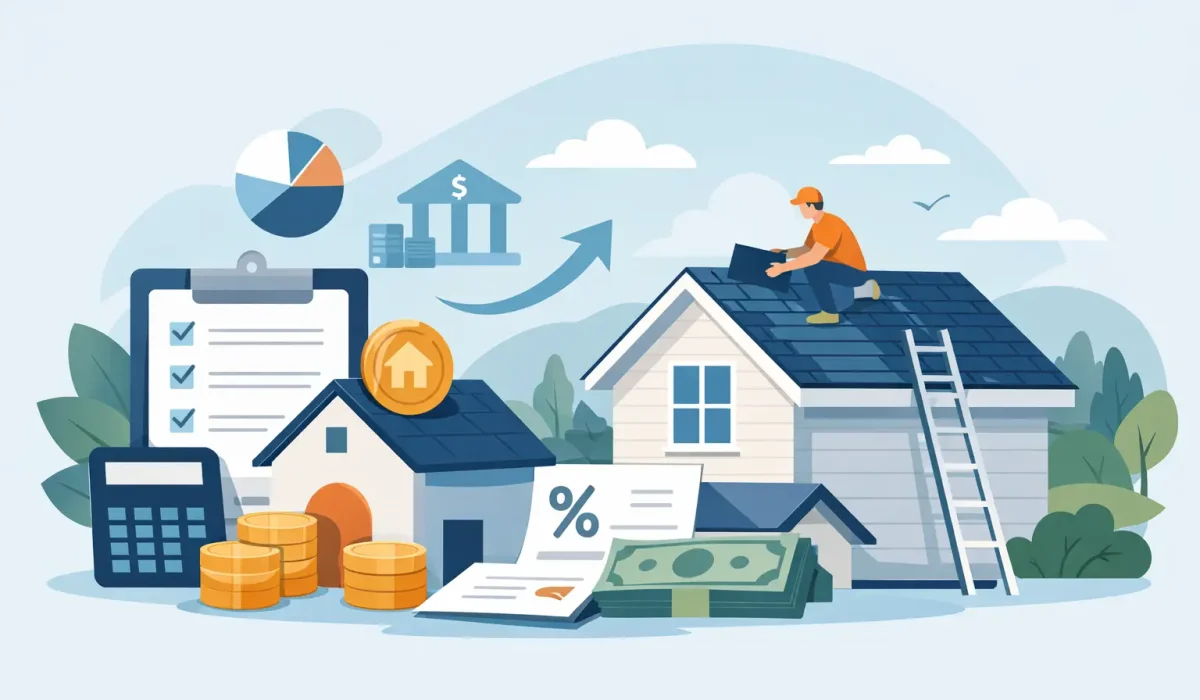
Most roof replacement projects are paid for through one of five paths: cash savings, insurance proceeds, contractor financing, personal or home-secured loans, and business financing for commercial properties. Each has its place, and each comes with trade-offs.
Cash is the simplest route if it is available. There is no lender approval, no interest, and no long-term monthly obligation. The downside is obvious. A roof replacement is a major capital expense, and tying up that much cash can strain reserves that may be needed for emergencies, operations, or other property improvements.
Insurance can offset a large share of the cost when storm damage or another covered event is involved. But insurance is not a general roof replacement fund for age-related wear. If the roof is simply old, near the end of its service life, or poorly maintained, coverage may be limited or denied. Even when a claim is valid, deductibles, depreciation, and claim timelines can still leave a meaningful balance to cover.
Contractor-arranged financing is often the most practical option for property owners who need to move quickly. It can simplify the process because the financing is tied directly to the project estimate, and approvals may be faster than a traditional bank process. Terms vary widely, though. Some plans offer promotional periods or fixed monthly payments, while others carry higher rates than borrowers expect. It pays to read the financing terms just as carefully as the roofing proposal.
Personal loans are another common choice, especially for residential owners who want unsecured financing without using home equity. They are generally faster to apply for than equity-based products, and funds can be available quickly. The trade-off is that unsecured loan rates are often higher, particularly for borrowers with average credit.
Home equity loans and home equity lines of credit can make sense when a homeowner has strong equity and wants a lower rate than an unsecured loan. These products can offer favorable terms, but they are secured by the home. That means approval may take longer, and the borrowing decision should not be made lightly.
For commercial properties, business loans or lines of credit may be the better fit. A retail center, office building, warehouse, condominium association, or multifamily property may need a financing structure that aligns with operating cash flow and reserve planning. In those cases, the roof is not just a repair item. It is part of asset protection and long-term property performance.
How to choose the right payment path
The best financing option is usually the one that solves the problem without creating a new one. Start with the urgency of the replacement. If active leaks, failed underlayment, wind damage, or code issues are in play, speed matters. Waiting for the perfect financing package can cost more than moving forward with a solid one.
Next, look at the full project cost, not just the roof covering. In South Florida, replacement often includes tear-off, underlayment, flashing, ventilation details, permit work, and code-related upgrades. On some buildings, structural repairs or decking replacement may also be required once the roof is opened. A financing plan should have enough flexibility to account for real project conditions, not just the base number on an early estimate.
Your ownership horizon matters too. If you plan to sell in the near future, a shorter-term financing solution may be preferable so the roof adds market value without leaving a long repayment tail. If this is a long-term hold, a fixed payment structure may be easier to manage and budget over time.
Credit profile also plays a role, but it should not be the only factor. A lower rate is attractive, but so is a lender or financing partner that can move quickly and clearly explain the terms. Hidden fees, deferred interest provisions, and penalties for early payoff can change the real cost of the loan.
When insurance is part of the equation
Property owners often assume insurance and financing are separate conversations. In reality, they often overlap. If the roof replacement is tied to covered storm damage, financing may be used to bridge timing gaps, cover the deductible, or handle scope items not fully paid by the carrier.
That is where documentation matters. A professional roof inspection, a clear scope of work, and a contractor that understands code requirements can help you make better decisions from the start. If an insurer only covers part of the work but code compliance requires a more complete replacement, financing can help close that gap and keep the project moving.
This is especially relevant in coastal markets like Miami and the Keys, where roofing systems take constant exposure from sun, wind, salt air, and heavy rain. What looks like a simple patch on paper can become a larger replacement issue once damage is fully assessed.
Questions worth asking before you sign
Before choosing among financing options for roof replacement, ask a few direct questions. Is the rate fixed or variable? Are there origination fees, dealer fees, or prepayment penalties? What is the monthly payment, and what is the total repayment amount over the life of the loan? If there is a promotional offer, what happens when that period ends?
It is also smart to ask how quickly funds can be released and whether the financing amount can cover permit-related costs and necessary change orders. Roofing projects are not always static. Once tear-off begins, hidden damage can appear. A plan with no flexibility can leave a project stalled at the worst time.
For commercial owners and property managers, there is another layer. Consider whether financing should be tied to capital improvement planning, reserve strategy, tenant obligations, or insurance requirements. The cheapest short-term solution is not always the best business decision if it compromises building performance or future budgeting.
Why contractor credibility matters in financing decisions
Financing does not fix a bad roofing job. It only spreads out the cost. That is why the contractor behind the project matters as much as the payment plan.
A licensed and insured roofing contractor should be able to provide a detailed scope, explain the material options, address permit requirements, and talk honestly about what is necessary versus what is optional. That level of clarity helps property owners finance the right project, not an incomplete one. It also reduces the risk of surprises that can strain the budget mid-job.
An experienced local contractor can also help you weigh timing. Sometimes a roof can be stabilized with repairs while financing is arranged. Sometimes that would be a mistake because the underlying system has already failed. The right guidance comes from inspection and experience, not guesswork.
For many property owners, that is where a company like Bob Hilson & Company, Inc. adds value. The financing conversation works better when it is backed by real roofing expertise, permit knowledge, and a clear understanding of what South Florida properties are up against.
A practical way to move forward
If you know the roof is aging, leaking, or showing signs of failure, do not wait until the damage spreads indoors. Start with a professional inspection and a written estimate that breaks down the scope clearly. Then compare financing based on total cost, approval time, and how well the terms fit your property and budget.
A roof replacement is not a small purchase, but it is one of the most important investments you can make in a home or commercial building. The right financing should help you protect the property properly, with quality workmanship and code-compliant installation, instead of pushing you toward a short-term patch that costs more later.
The best time to sort out payment is before the next leak makes the decision for you.