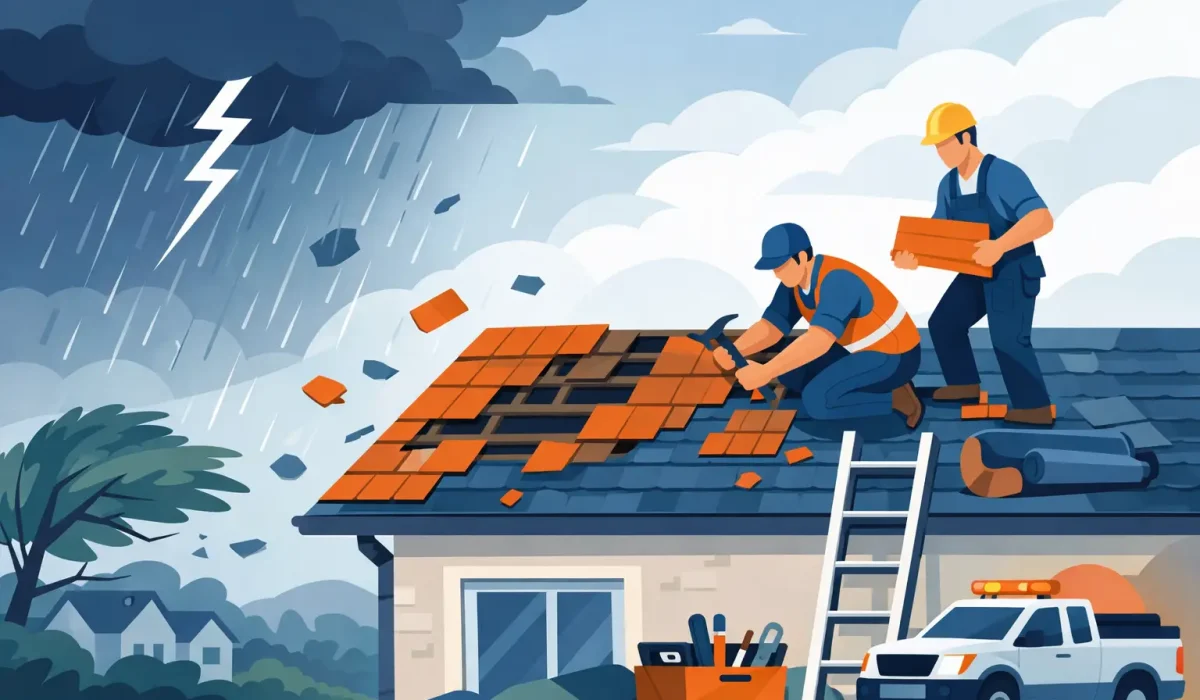
A roof can look fine from the driveway and still be taking on water. That is what makes storm damaged roof repair so time-sensitive. By the time a stain shows up on a ceiling, the real damage may already be spreading through underlayment, decking, insulation, and interior finishes.
In South Florida, storms do not give roofs much room for error. Wind lifts edges, heavy rain finds weak spots, and flying debris can turn a small vulnerability into an active leak in one afternoon. If your property has been through a recent storm, the right move is not to guess. It is to get the roof checked, protect the building, and make a repair plan based on what is actually there.
Why storm damaged roof repair cannot wait
A lot of owners hope the problem is minor if the leak stops after the weather clears. Sometimes it is minor. Often it is not. Water can travel along decking and framing before it becomes visible indoors, which means the source and the symptom are rarely in the same place.
That delay matters. What starts as a few displaced shingles, a punctured membrane, lifted flashing, or broken tile can turn into rotten wood, damaged drywall, mold growth, and electrical concerns. On commercial properties, it can also affect tenants, operations, inventory, and liability.
Fast action does not always mean a full roof replacement. In many cases, a targeted repair is the smart solution. The key is knowing the difference between damage that can be repaired confidently and damage that signals a bigger system failure.
What storm damage looks like on different roof types
Storm damage is not the same across every roofing system. A proper inspection should be based on the material, the age of the roof, and how the building is exposed.
Shingle roofs
On shingle roofs, wind damage often shows up as missing tabs, creased shingles, lifted edges, and loosened ridge materials. Granule loss can also increase after a storm, especially on older roofs. If water gets past the surface layer, the underlayment and wood decking may already be compromised.
Tile roofs
Tile roofs can survive harsh weather well, but impact damage is a common issue. Cracked or slipped tiles may not always be obvious from the ground. The challenge with tile is that the visible break is only part of the story. The fastening method, underlayment condition, and nearby components all need to be checked.
Flat and low-slope roofs
For flat roofs, standing water, punctures, split seams, membrane shrinkage, and flashing failure are common storm-related problems. Debris from wind can also damage the surface. A flat roof may hold water for hours after a storm, which makes even a small defect more serious.
Metal roofs
Metal systems can take a beating, but storms can loosen fasteners, separate seams, damage flashing, and bend edge details. If panels were installed improperly or the system is aging, heavy wind can expose those weaknesses quickly.
What to do right after a storm
The first priority is safety. If there is active leaking near electrical fixtures, sagging ceilings, or visible structural movement, keep people clear of the area and call qualified professionals right away.
After that, document what you can safely see. Interior water stains, wet insulation, damaged ceilings, debris impact, and exterior roof conditions all matter. Photos taken soon after the storm can help support repair planning and insurance discussions.
Do not climb onto the roof unless you have the training and equipment to do it safely. Wet surfaces, hidden punctures, and unstable materials make post-storm roofs dangerous. A proper inspection from a licensed and insured roofing contractor is the safer move and usually the more useful one.
If the roof is actively taking on water, temporary protection may be needed to limit further damage. That can include emergency tarping or other short-term measures until permanent repairs are completed. Temporary work helps buy time, but it is not the repair itself.
How a professional storm damaged roof repair inspection should work
A real inspection is more than a quick glance and a guess. It should evaluate the full roofing system, not just the most obvious damaged area.
That means checking surface materials, flashings, penetrations, perimeter details, drainage points, underlayment where accessible, and signs of moisture intrusion below the roof line. On commercial buildings, the inspection may also need to account for rooftop equipment, traffic patterns, and how water moves across the system.
A good contractor should explain whether the issue is isolated or widespread. That distinction affects cost, urgency, and whether a repair will hold up long term. It also affects permitting and code considerations, which matter in places like Miami-Dade County where roofing work is held to a high standard for good reason.
Repair or replacement depends on more than the leak
Property owners often ask the same question first: Can this be repaired, or do I need a new roof?
The answer depends on several things. The age of the roof matters. The roofing system matters. The extent of storm damage matters. Just as important, the condition of the surrounding roof area matters. A repair may solve the problem cleanly if the damage is limited and the rest of the system is still performing well.
If the roof is near the end of its service life, has repeated leak history, or has widespread material failure, a repair may only delay a larger problem. That does not mean replacement is always the answer. It means the recommendation should be based on condition, not wishful thinking.
A dependable contractor will tell you when a repair makes sense and when putting money into an aging roof is no longer the smart investment.
The risk of cheap storm repairs
After a major weather event, quick-fix crews tend to show up. They promise fast work, low prices, and immediate availability. For owners under pressure, that can be tempting.
This is where expensive mistakes start.
Storm repairs need to be code-compliant, properly detailed, and matched to the existing roofing system. Poor patchwork can trap water, void manufacturer requirements, create problems during future inspections, and fail in the next storm. If permits are required, skipping that step creates another layer of risk.
Quality pays on roofing work because the roof is not just a surface. It is part of the building envelope. A bad repair can affect far more than one wet spot.
What insurance may cover and where owners get stuck
Insurance may help with storm-related roof damage, but every claim is different. Coverage depends on the policy, the cause of loss, the age and condition of the roof, and how the damage is documented.
What usually helps is acting quickly, keeping records, and getting a clear inspection from a contractor who knows how to identify storm-related issues accurately. What does not help is waiting too long, making assumptions about the cause, or relying on a vague verbal estimate.
Owners also get stuck when they focus only on visible damage. Interior staining is one part of the claim picture, but hidden moisture damage can be just as important. A thorough assessment gives you a better understanding of the actual scope before repair work begins.
Choosing the right contractor for storm damaged roof repair
Not every roofer is equipped to handle storm work well. The right contractor should have experience with your specific roof type, understand local code requirements, carry proper licensing and insurance, and be able to manage both emergency response and permanent repair.
In South Florida, that experience matters even more. Coastal weather, wind exposure, moisture, and strict permitting are not side issues here. They shape how roofing work should be done from the first inspection to the final detail.
Established contractors like Bob Hilson & Company, Inc. bring an advantage that is hard to fake – long-term local knowledge. When a contractor has worked through decades of storms, roof systems, and code changes, the recommendations tend to be more practical and more reliable.
Protect the building first, then make the right repair
Storm damage puts owners in a hurry, and that is understandable. The leak is real, the stress is real, and nobody wants damage spreading through a home or commercial property.
Still, the best results come from doing the urgent things first and the permanent things right. Protect the building. Get the roof inspected. Understand whether the problem is isolated or systemic. Then move forward with a repair plan that fits the roof you have, the damage that occurred, and the long-term value of the property.
A storm does not always mean you need a new roof, but it does mean the roof has to prove it is still doing its job.