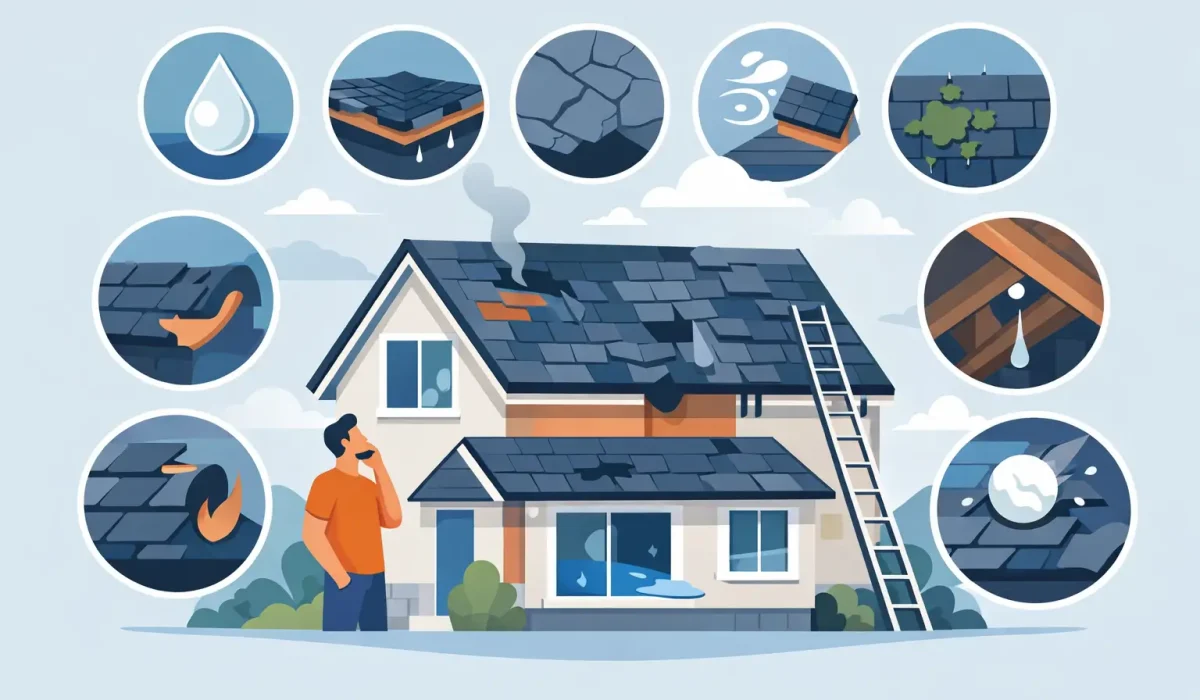
A roof usually does not fail all at once. It gives you warnings first – some obvious, some easy to miss until the damage spreads. If you are seeing signs you need a new roof, waiting too long can turn a roofing project into interior repairs, mold issues, structural damage, and a much bigger bill.
In South Florida, that risk moves faster than it does in milder climates. Heat, UV exposure, wind-driven rain, salt air, and storm seasons all put extra stress on roofing systems. A roof that still looks passable from the ground may already be losing its ability to protect the property underneath.
1. Leaks keep coming back
One leak does not always mean full replacement. A localized problem around flashing, a vent, or a small damaged section can often be repaired. But when leaks return after prior repairs, or show up in different areas over time, that usually points to a roof system that is wearing out as a whole.
Water stains on ceilings, bubbling paint, damp drywall, and musty odors are all signs that moisture is getting past the outer layer and into the structure. Once that happens repeatedly, the issue is no longer just cosmetic. The roof may have multiple weak points, deteriorated underlayment, or age-related failure that patchwork repairs will not solve for long.
2. Shingles are curling, cracking, or going missing
On shingle roofs, surface wear is one of the clearest warning signs. Shingles that curl at the edges, crack, lose granules, or blow off during storms are no longer doing their job the way they should.
A few damaged shingles can sometimes be replaced. The problem is scale. If wear is spread across large sections, or if matching materials are no longer available, repairs become less practical. Older shingle roofs also tend to become brittle, which means repair work can disturb adjacent areas and create new problems.
If your gutters are collecting large amounts of shingle granules, that is another sign of advanced wear. Those granules help protect the roof from UV exposure. Once they are gone, the roof ages faster.
3. The roof has reached the end of its expected service life
Age matters, even if the roof is not actively leaking today. Different materials have different life spans, and South Florida weather can shorten them. A roof exposed to intense sun, heavy rain, moisture, and repeated storms may wear out sooner than the same system in a less demanding climate.
That does not mean every older roof must be replaced immediately. It does mean older roofs deserve a serious inspection, especially if they have a history of repairs or weather exposure. If your roof is approaching the typical replacement window for its material, it is smart to evaluate replacement before failure forces an emergency decision.
4. Sagging or soft spots are showing up
A roofline should look straight and stable. If you notice sagging sections, dips, or areas that feel soft underfoot during professional inspection, there may be moisture damage in the decking or structural components below.
This is not a wait-and-see issue. Persistent moisture can rot wood, weaken fasteners, and compromise the roof’s ability to handle wind and water. In some cases, the visible roofing material is only part of the problem. The roof assembly underneath may already need more extensive work.
For homeowners and commercial property managers alike, this is one of the strongest signs you need a new roof, not just another surface repair.
5. Flashing and roof penetrations are failing
Many roof leaks start at the details rather than in the field of the roof. Flashing around chimneys, vents, skylights, parapet walls, and equipment curbs takes constant exposure to water, movement, and heat. When those components corrode, separate, or were installed poorly to begin with, leaks tend to follow.
If flashing issues are isolated, repairs may be enough. But when multiple penetrations are failing, or when the roof around them is also aging, replacement is often the more dependable long-term solution. This is especially true on flat and low-slope systems where drainage and waterproofing details are critical.
6. Repairs are becoming frequent and expensive
There is a point where repeated repair costs stop making financial sense. Many property owners hold off on replacement because they want to get every possible year out of the current roof. That is understandable. But if you are paying for leak calls, patching, storm fixes, interior damage, and ongoing maintenance every season, the roof may already be telling you it is done.
A new roof is a major investment, but so is a roof that keeps failing. The right question is not just, “Can this be repaired?” It is, “Is this still the smart solution for the next several years?”
That answer depends on the roof’s age, material, condition, and how widespread the failures are. A professional inspection can help separate a repairable roof from one that is simply costing too much to keep alive.
7. Storm damage has compromised the system
South Florida roofs take a beating from tropical weather. High winds can lift roofing materials, drive water into seams, damage flashing, and loosen attachments that are not visible from the ground. Even when the damage looks limited, the integrity of the system may be affected.
After a major storm, some roofs can be repaired successfully. Others have enough damage that replacement is the safer and more cost-effective path, especially if the roof was already aging before the storm hit. Insurance and code requirements can also influence what makes sense, particularly when damage affects a significant portion of the roof.
This is where experience matters. A proper evaluation should look beyond the obvious signs and account for underlayment condition, deck integrity, attachment methods, and compliance with current standards.
8. Mold, moisture, or rot is showing up inside
Sometimes the clearest roof warning signs are inside the building. Mold growth near ceilings or upper walls, damp insulation, peeling paint, and recurring indoor humidity problems can all trace back to roof failure.
Moisture does not always drip straight down from the entry point. It can travel along decking, framing, or insulation before it becomes visible. That makes roof-related water intrusion easy to underestimate.
If interior moisture problems are linked to roofing issues, the longer they continue, the more expensive they become. Replacement may not be the first assumption, but when moisture intrusion is ongoing and the roof system is aging, it should be on the table.
9. The roof no longer matches current performance needs
This comes up often on both homes and commercial properties. Maybe the existing roof was installed decades ago under older standards. Maybe ventilation is poor. Maybe drainage has always been marginal. Maybe the material is not the best fit for the building anymore.
A roof does not have to be collapsing to justify replacement. If it is consistently underperforming, vulnerable in storms, or difficult to maintain, a new system may offer better protection and better value over time. That is especially true when replacement allows for upgraded materials, improved waterproofing details, and code-compliant installation.
When repair still makes sense
Not every problem points straight to replacement. Newer roofs with isolated damage, limited leaks, or small flashing failures can often be repaired effectively. The key is whether the problem is contained or systemic.
A good contractor should tell you when a repair is enough. If the roof still has useful life left and the damaged area is limited, a repair may be the right move. But if the same roof keeps showing new trouble spots, replacement is usually the more honest recommendation.
What to do if you notice these signs you need a new roof
Start with a professional roof inspection. Do not rely on guesswork from the ground, and do not assume a stain or missing shingle is the whole story. A proper inspection should identify visible damage, hidden moisture risks, remaining service life, and whether repair or replacement makes more sense.
For property owners in Miami, the Florida Keys, and surrounding South Florida communities, local conditions matter. Roofing decisions here need to account for storm exposure, humidity, permitting, and material performance in a coastal environment. That is one reason experienced local evaluation is worth it.
If the roof does need replacement, the goal is not just to stop current leaks. It is to install a system that protects the property, meets code, and holds up over the long term. Bob Hilson & Company, Inc. has worked with South Florida property owners for decades, and the right roofing plan always starts with a clear assessment of what the roof is telling you now.
If your roof is showing its age, leaking more than once, or making you question every heavy rain, this is the time to get answers before the damage spreads.