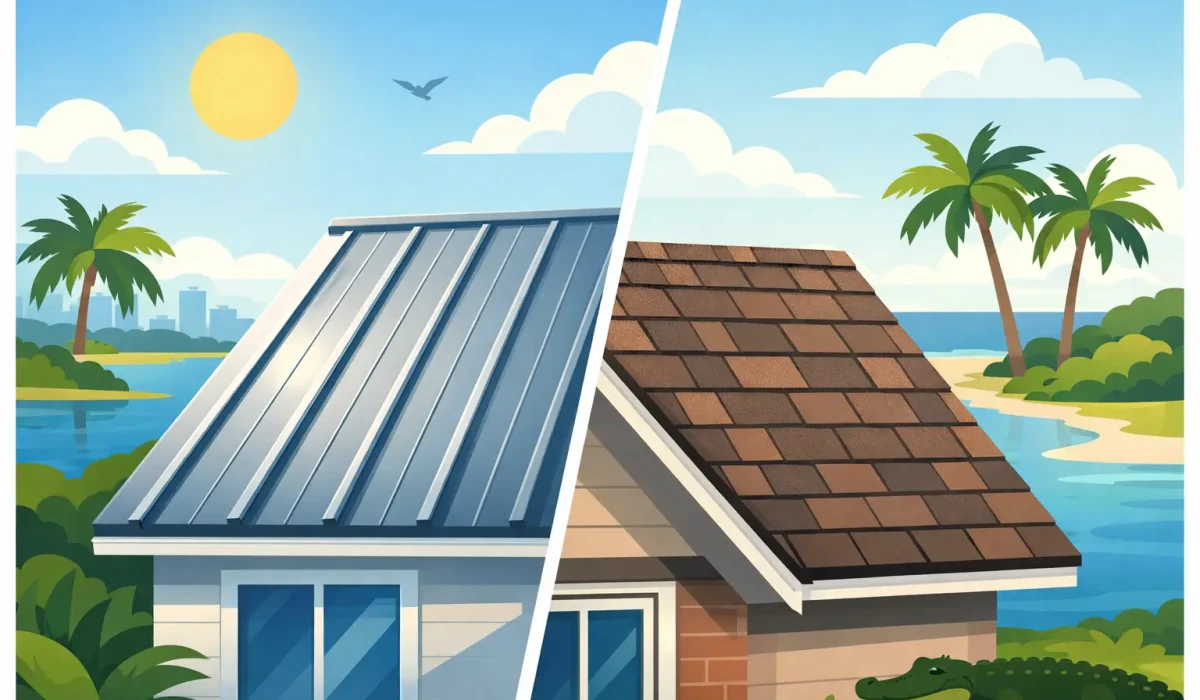
If your roof is nearing the end of its life, the metal roof vs shingle roof Florida question is not just about appearance. In South Florida, your roofing choice has to stand up to heat, wind, salt air, heavy rain, and strict code requirements. What works well in another state may not be the smart choice here.
For homeowners and property owners in Miami-Dade and the Keys, the right answer usually comes down to budget, building type, long-term plans, and exposure to coastal weather. Both systems can perform well when they are properly specified and installed. The difference is in how they handle Florida conditions over time.
Metal roof vs shingle roof Florida: what matters most
A roof in Florida does more than keep water out. It has to resist uplift during storms, shed heavy rain quickly, hold up under intense UV exposure, and stay serviceable in a humid environment where small failures can turn into bigger damage fast.
That is why the comparison should start with performance, not just upfront price. Shingles are familiar and usually cost less at the start. Metal roofing generally costs more, but it often brings longer service life, stronger wind performance, and lower maintenance demands when the system is designed correctly.
For many property owners, the real question is not which roof is better in general. It is which roof is better for this building, in this location, with this budget.
Upfront cost versus long-term value
Shingle roofs usually win on initial cost. If you need a full roof replacement and budget is the top concern, asphalt shingles are often the more accessible option. They can deliver a solid result for many homes, especially when quality materials and proper underlayment are part of the system.
Metal roofs typically require a higher upfront investment. Material cost is higher, and installation takes skill. On the right property, though, metal can make financial sense over the long run because it often lasts significantly longer and may reduce the frequency of major replacement cycles.
That matters in Florida, where roofs do not get an easy life. Constant sun, moisture, and storm exposure can age lower-end systems faster than owners expect. Paying less now can be reasonable, but only if you are realistic about maintenance, repair risk, and replacement timing.
When shingles make more financial sense
If you plan to sell in the near future, if the property is not your long-term hold, or if you need to control immediate capital expense, shingles may be the practical choice. They also work well when a home’s design and neighborhood style are built around a traditional shingle look.
When metal makes more financial sense
If you expect to stay in the property for many years, want stronger long-term durability, or own a building in a high-exposure coastal area, metal often deserves serious consideration. The higher initial price can be offset by service life and performance.
How each roof handles Florida weather
Florida weather is where this comparison gets real. A roofing system that looks good on paper can become a problem if it is not suited to wind-driven rain, tropical systems, and year-round heat.
Metal roofs are known for durability in harsh weather. Properly engineered and installed metal systems can offer excellent wind resistance, and they do a strong job shedding water. That is a major advantage in areas that see intense rain events and hurricane concerns.
Shingle roofs can also perform well in Florida, but quality matters. Product grade, fastening pattern, underlayment, ventilation, and installation details all affect how well the roof holds up. A poorly installed shingle roof is a liability. A properly installed, code-compliant shingle roof is a proven option for many homes.
In coastal areas such as parts of Miami and the Florida Keys, salt air adds another layer of consideration. Metal systems need the right material selection and finish to resist corrosion. That does not rule metal out. It simply means the system has to be chosen with the environment in mind.
Lifespan and maintenance expectations
One of the biggest differences between these systems is service life. Metal roofing generally lasts longer than asphalt shingles. While exact timelines depend on product type, exposure, maintenance, and installation quality, metal is usually the longer-term system.
Shingle roofs can still provide years of reliable protection, but they tend to have a shorter lifespan and may show wear earlier under Florida sun and storm stress. Granule loss, curling, cracking, and uplift damage are all issues owners may face as the roof ages.
Maintenance is part of the equation too. Metal roofs are not maintenance-free, but they often require less frequent intervention for age-related deterioration. Shingle roofs may need closer monitoring over time, especially after major storms.
That said, no roof should be ignored in South Florida. Regular inspections are a smart move no matter which system you choose. Catching flashing issues, fastener problems, or early water entry can prevent expensive structural repairs later.
Appearance and property type
Shingles remain popular because they fit the look of many homes. They offer a familiar appearance and work well with a wide range of residential styles. If curb appeal and neighborhood consistency are key concerns, shingles often check that box.
Metal roofing has expanded well beyond the old industrial look many people still picture. Today, metal systems can suit residential and commercial properties alike, with clean lines and profiles that work on modern homes, coastal properties, and many low-slope or specialty designs.
The building itself should guide the decision. A single-family home in a traditional subdivision may point one way. A waterfront property, multifamily building, or commercial structure with different drainage and wind considerations may point another.
Insurance, codes, and installation quality
In Florida, the roof system is only part of the story. Code compliance, permitting, attachment methods, and workmanship are just as important. Especially in Miami-Dade County, roofing work has to meet demanding standards.
This is where experience matters. A roof replacement is not just a material purchase. It is a construction project with real consequences for safety, insurability, and long-term performance. The best material can still fail if the installation is rushed or handled by a contractor who does not understand local requirements.
Whether you choose metal or shingles, ask how the system will be installed, what underlayment is being used, how ventilation is being addressed, and how the project will meet current code. Those details affect performance as much as the visible roofing surface.
Which roof is better for your Florida property?
There is no single answer that fits every property owner. If your priority is lower upfront cost and a traditional appearance, shingles may be the right fit. If your priority is long-term durability, storm performance, and a longer service life, metal may be the stronger investment.
The condition of the existing roof structure also matters. Some buildings are better candidates for one system than the other based on slope, deck condition, design, and budget for related upgrades. That is why a site-specific evaluation is worth more than broad advice from a generic online comparison.
At Bob Hilson & Company, Inc., we have seen both systems perform well when they are matched to the property and installed the right way. We have also seen costly problems when owners choose based on price alone without considering Florida exposure, code demands, and long-term value.
A practical way to decide
Start with three questions. How long do you plan to keep the property? How exposed is the building to wind, salt air, and harsh sun? And what matters more right now – lower initial cost or longer-term return?
If you are unsure, that is normal. Roofing decisions are major investments, and Florida adds real complexity. The smart move is to compare options based on your actual property, not a one-size-fits-all recommendation.
A good roof should give you confidence when the weather turns and protect the value of the building year after year. Choose the system that fits the structure, fits your goals, and is installed by a contractor who knows what Florida roofs are up against.