A roof that looks good on paper can fail fast in a South Florida storm. When wind starts lifting edges, rain drives sideways, and salt air keeps working year-round, the best roofing material for hurricane prone areas is not a simple one-size-fits-all answer. It depends on your building type, roof shape, budget, local code requirements, and how long you plan to keep the property.
For homes and commercial buildings in Miami-Dade County and the Florida Keys, the right choice usually comes down to how well a system handles uplift resistance, water intrusion, impact, corrosion, and long-term maintenance. Cost matters, but so does how the entire assembly is installed. A premium material installed poorly can underperform. A solid system installed to code by an experienced contractor will usually protect your investment far better.
What matters most in hurricane zones
In hurricane-prone areas, roofing decisions should start with performance, not appearance. High winds put pressure on the roof edge, corners, and fastening points. Heavy rain tests every seam, flashing detail, penetration, and underlayment layer. Over time, heat, UV exposure, humidity, and salt air can shorten the life of materials that might perform well in milder climates.
That is why the strongest roofing choice is usually the one that combines wind resistance, proper attachment, durable waterproofing, and compatibility with local building codes. In South Florida, code compliance is not a box to check at the end. It should shape the material and system you select from the beginning.
Best roofing material for hurricane prone areas: the top contenders
There is no single best option for every property, but a few materials consistently rise to the top.
Metal roofing
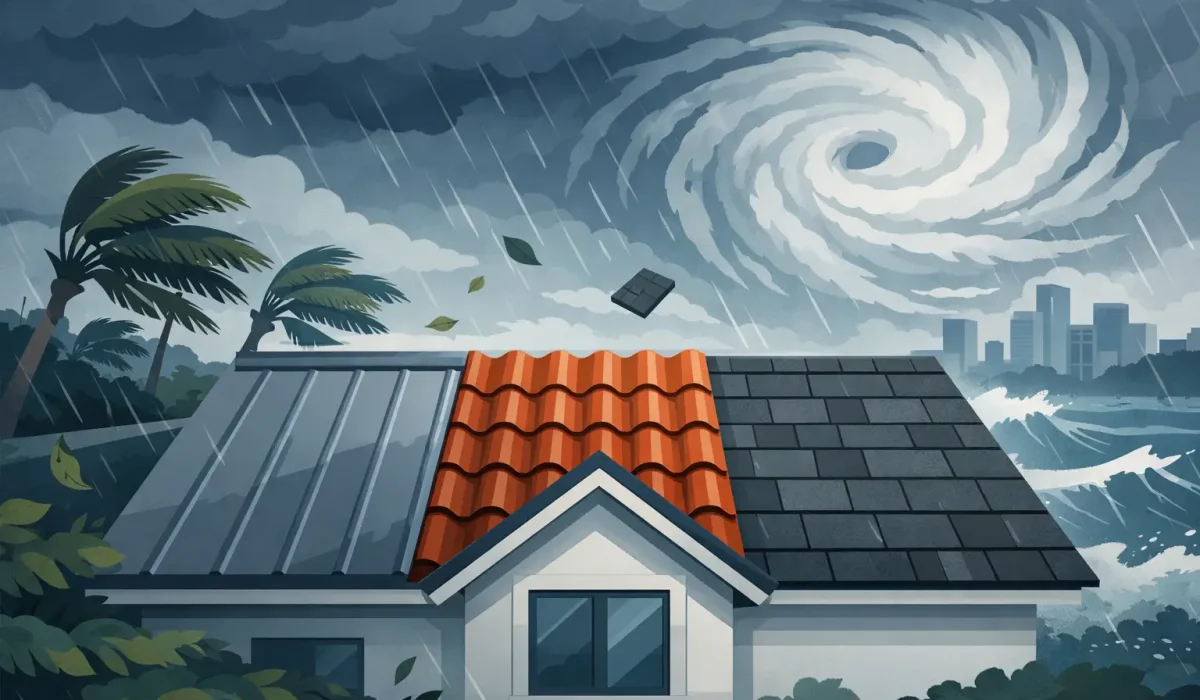
For many buildings, metal is one of the best roofing material choices for hurricane prone areas. Properly engineered metal roofing systems can offer excellent wind resistance, long service life, and strong protection against driving rain. They are also lighter than tile, which can reduce structural load concerns in some projects.
Metal performs especially well when the panels, clips, fasteners, and edge details are designed as a complete system. This is where quality matters. Not all metal roofs are equal. The gauge of the metal, the profile, the fastening method, the coating, and the skill of the installer all affect storm performance.
The trade-off is cost. Metal roofing usually requires a higher upfront investment than shingles. In coastal environments, material selection also matters because corrosion resistance is critical. If a property owner wants long-term value and strong hurricane performance, metal is often a smart option.
Concrete or clay tile roofing
Tile remains a common choice across South Florida for good reason. It stands up well to heat, sun, and daily weather exposure, and it can perform well in hurricane regions when installed with the right attachment methods and underlayment system. For many homeowners, tile also offers strong curb appeal and can complement the architectural style of the property.
That said, tile is not automatically the best answer just because it is common. Tile roofs are heavy, which means the structure has to be able to support the load. Individual tiles can also crack from impact or foot traffic, and repairs can be more involved than with some other systems. The underlayment below the tile plays a major role in water protection, so its quality and condition are just as important as the tile itself.
For property owners planning to stay long term, tile can make sense. For someone focused on lower installation cost or easier repairs, another system may be a better fit.
Architectural asphalt shingles
Shingles are often the most budget-friendly option for residential properties, and modern architectural shingles can offer respectable wind ratings when installed correctly. They are widely available, easier to repair in many cases, and lower in upfront cost than metal or tile.
Still, shingles usually do not offer the same lifespan or storm resilience as top-tier metal or tile systems in a harsh coastal climate. In hurricane-prone regions, they are more vulnerable to wind damage if the product selection, fastening pattern, ventilation, and edge installation are not handled properly. They can be a practical solution for some homes, but they are not always the strongest long-term choice for high-exposure properties.
If budget is driving the decision, shingles may be the right move. The key is choosing a product rated for local conditions and making sure the installation meets current code requirements.
Flat and low-slope roofing systems
On commercial buildings and some residential structures, flat or low-slope roofs require a different conversation. In these cases, the best roofing material for hurricane prone areas often includes systems like modified bitumen, TPO, PVC, or built-up roofing, depending on the building use and design.
What matters most here is not just the membrane itself, but how the entire roof assembly resists uplift and manages water. Ponding water, flashing failures, and edge detail issues can become major problems during tropical weather. A low-slope roof in South Florida needs a system selected for the building’s use, exposure, drainage layout, and maintenance expectations.
For commercial owners and property managers, this is where working with a contractor who understands both code and system design becomes especially important.
The real answer often comes down to your property
A single-family home in Coral Gables does not have the same roofing needs as a retail building in Homestead or a waterfront property in the Keys. Roof pitch, age of the structure, attic ventilation, surrounding exposure, and even insurance considerations can influence the right material.
If your property has a steep slope and you want maximum longevity, metal or tile may be worth the investment. If you need a more cost-conscious replacement on a standard residential roof, architectural shingles may be a reasonable option. If you own a commercial building with a low-slope system, membrane performance and drainage design will matter more than anything else.
That is why experienced contractors look beyond the brochure. They assess the deck condition, fastening requirements, perimeter details, moisture risk, and permit conditions before recommending a system.
Installation quality matters as much as the material
Property owners sometimes focus only on product names and miss the bigger issue. Hurricane performance depends heavily on how the system is installed. Underlayment attachment, flashing transitions, edge metal, penetrations, fastening patterns, and ventilation all affect whether a roof performs when a storm hits.
A cheaper bid can become expensive fast if shortcuts lead to leaks, blow-offs, or failed inspections. In South Florida, roof work should be handled by licensed and insured professionals who understand local permitting, product approvals, and wind-zone requirements.
This is one reason established local experience matters. A contractor who has worked through multiple storm seasons understands what tends to fail first and how to build against it.
How to choose the best roofing material for hurricane prone areas
Start with the basics. Ask how long you want the roof to last, how much maintenance you are willing to take on, and what your budget looks like over the full life of the system, not just installation day. Then consider the structure itself. Some materials may be ideal in theory but less practical on your specific building.
Next, look at local code compliance and approved systems. In Miami and surrounding coastal areas, these requirements are there for a reason. They help reduce failure risk under extreme wind conditions. The material you choose should be paired with an installation method designed for your exact roof assembly.
Finally, think in terms of total protection. The best roof is not just the one with the highest rating on a product sheet. It is the one that fits your property, your exposure, and your long-term plans while being installed correctly from the deck up.
A practical recommendation for South Florida owners
If you want the short answer, metal roofing is often the strongest all-around option for hurricane-prone areas when budget allows and the system is properly specified. Tile is also a strong contender for many homes, especially where appearance and longevity are priorities. Shingles can still be a valid choice for budget-conscious projects, but they require careful product selection and quality installation to perform well in a severe weather region. For flat and low-slope buildings, the right membrane system depends on the building and should be evaluated case by case.
At Bob Hilson & Company, Inc., this is the kind of decision that should be made with a clear understanding of risk, code, and long-term value – not guesswork. A roof in hurricane country has one job: protect the building when conditions are at their worst. Choose the system that is built for that job, and make sure the workmanship is strong enough to match it.