
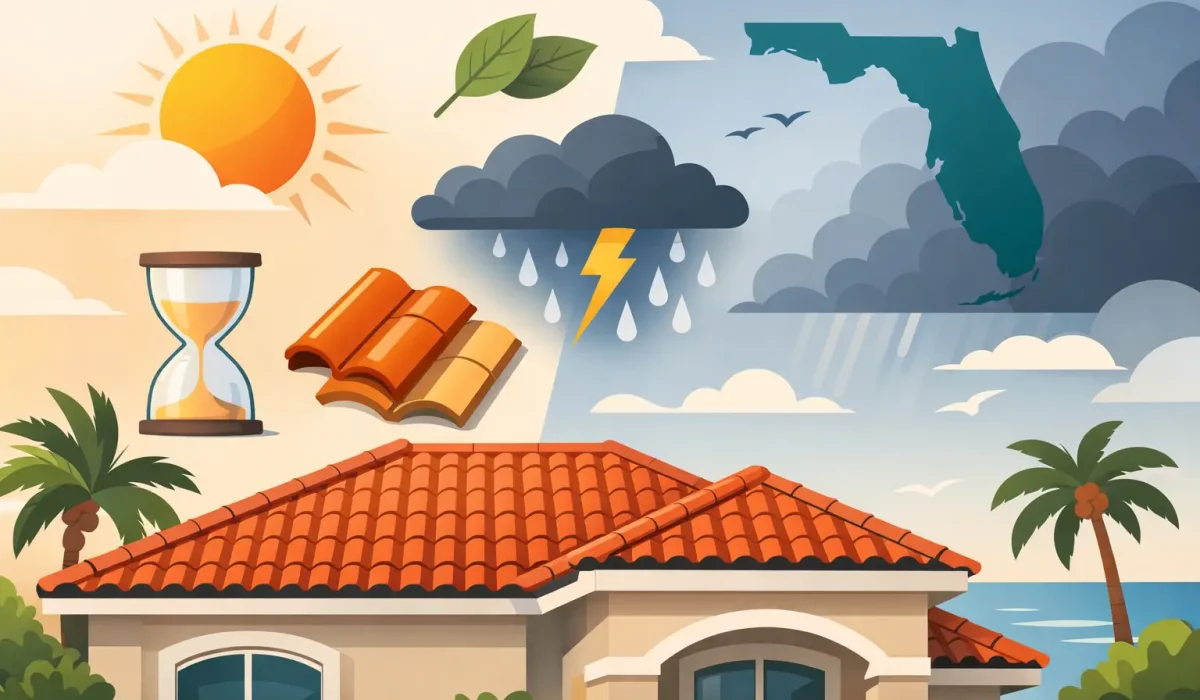
A tile roof in South Florida can look solid from the street and still be much closer to the end of its service life than the owner realizes. That is why one of the most common questions we hear is, how long does a tile roof last in Florida? The short answer is usually 25 to 50 years, but the real answer depends on the tile type, the underlayment, installation quality, storm exposure, and how well the roof has been maintained over time.
For property owners in Miami, Miami-Dade County, and the Florida Keys, that distinction matters. Florida does not treat roofing materials gently. Heat, salt air, heavy rain, high humidity, and hurricane-force winds all put pressure on a tile roof system. If you want to know how much life your roof really has left, you have to look beyond the tile itself.
How long does a tile roof last in Florida homes and buildings?
Most tile roofs in Florida fall into a broad lifespan range of 25 to 50 years. In some cases, the tile itself may last even longer. Clay tile is known for long-term durability, and concrete tile can also perform well for decades. But the roofing system under the tile often determines when major work becomes necessary.
That is the part many owners miss. A tile roof is not just tile. It is a complete assembly that includes decking, flashing, fasteners, and most importantly, the underlayment that serves as the waterproof barrier beneath the tile. In Florida, tile may still be in place while the underlayment below has already dried out, cracked, shifted, or failed around penetrations and valleys.
So when someone asks how long does a tile roof last in Florida, the practical answer is this: the visible tile may outlast the waterproofing layer by many years. That is why age alone never tells the full story.
What affects tile roof lifespan in Florida?
Florida’s climate is the biggest factor, but it is not the only one. A well-built tile roof with quality materials and proper detailing can perform for decades. A poorly installed system may develop leaks much sooner, even if the tile still looks acceptable.
Tile material
Clay and concrete are the two most common tile roofing materials in Florida. Clay tile typically holds up very well against sun exposure and can maintain its appearance for a long time. Concrete tile is also durable, but it may weather differently and can be more vulnerable to surface wear depending on product quality and site conditions.
Neither material is indestructible. Tiles can crack from impact, foot traffic, shifting substrate, or storm debris. Once enough individual tiles are damaged, water intrusion becomes more likely.
Underlayment quality
Underlayment is often the true clock on a Florida tile roof. If the underlayment was a lower-grade product, or if it was installed improperly, the roof may begin having leak issues long before the tile itself is worn out. Premium underlayments and proper fastening methods usually provide a better long-term result, especially in high-wind coastal areas.
Installation standards
Good tile roofing work is detailed work. Flashing must be right. Valleys must drain correctly. Fasteners must meet code. Tiles must be set and secured properly for local wind conditions. In South Florida, permit requirements and code compliance are not side issues. They are central to roof performance.
A roof can lose years of life if shortcuts were taken during the original installation or during past repairs.
Storm exposure and coastal conditions
The closer a property is to the coast, the harsher the roofing environment tends to be. Salt air accelerates wear on metal components. Wind-driven rain finds weaknesses fast. Tropical storms can loosen tile, damage flashing, and create hidden failure points that do not always show up immediately.
After major weather events, even a roof that appears intact may need inspection. Small problems become expensive ones when they go unnoticed.
Maintenance history
Tile roofs do not need constant attention, but they do need periodic inspection and upkeep. Debris buildup in valleys, broken tiles, deteriorated sealants, and drainage issues all shorten roof life. Regular maintenance helps catch isolated problems before they spread into underlayment damage or deck deterioration.
Signs your tile roof may be nearing the end
A tile roof rarely fails all at once. More often, it gives warnings. The challenge is that some of those warnings are easy to dismiss until interior damage appears.
One sign is recurring leaks in the same general area, especially after repairs have already been made. Another is widespread cracked, slipped, or missing tile. You may also see staining on ceilings, moisture in the attic, deteriorated flashing, or signs that previous patchwork repairs are starting to stack up.
Age matters too. If a tile roof is pushing past 25 or 30 years in Florida and has not had major underlayment work, it deserves a careful evaluation even if leaks seem minor. Many owners focus on the surface and miss the aging waterproofing below.
For commercial properties and multifamily buildings, the stakes are even higher. A small leak can affect multiple units, disrupt tenants, and lead to more serious interior and structural issues if repairs are delayed.
Can a tile roof last 50 years in Florida?
Yes, some can. But not every tile roof will, and not every part of the system will make it that long.
A 50-year outcome usually depends on several things going right at once: quality materials, strong installation, favorable maintenance history, and no major long-term neglect after storms or leaks. It also helps when repairs are handled promptly by experienced roofing professionals who understand tile systems rather than trying to force short-term fixes onto a roof that needs a more complete solution.
In real-world Florida conditions, many tile roofs need substantial work before 50 years. Sometimes that means replacing underlayment while salvaging usable tile. In other cases, the roof has reached a point where full replacement makes more sense than continued repair.
Repair or replace?
This is where homeowners and property managers often need the clearest guidance. If the issue is isolated – a few broken tiles, a small flashing failure, minor storm damage – repair may be the smart move. But if leaks are recurring, underlayment is deteriorating across large sections, or the roof is simply aged out, repair money can start chasing a problem that will not stay fixed.
The right decision comes down to condition, not just cost. A lower repair bill today is not always the better value if it leads to more interior damage, emergency leak calls, and a full replacement in the near future anyway.
An experienced inspection should look at more than visible tile damage. It should assess the integrity of the full roofing system, identify moisture pathways, and consider how much useful life is realistically left. That is especially important in South Florida, where roofing work must hold up under strict code requirements and severe weather conditions.
How to get the most life out of a tile roof
If your tile roof is still in serviceable condition, a few practical habits can help extend its lifespan. Schedule professional inspections, especially after major storms. Replace broken or displaced tile promptly. Keep valleys and drainage paths clear. Pay attention to early signs of water intrusion instead of waiting for a stain to spread across a ceiling.
Just as important, avoid unnecessary foot traffic. Tile can crack under improper weight or movement, and damage caused during unrelated work is more common than many owners realize. If other trades need roof access, that should be managed carefully.
Working with a licensed, insured roofing contractor who understands South Florida tile systems also matters. On older roofs in particular, experience makes a difference. The goal is not just to stop a leak today. It is to protect the roof’s remaining life and help you make sound decisions about repair versus replacement.
At Bob Hilson & Company, Inc., we have seen tile roofs across Miami and South Florida at every stage – newer systems with storm damage, aging roofs with underlayment failure, and long-serving roofs that simply reached the point where replacement was the smarter investment. No two properties age exactly the same way.
If you are asking how long your tile roof will last, you are already asking the right question. The next step is finding out the actual condition of the system you have, because a roof that still looks good from the ground may be telling a different story up close.